Study
How teaching, assessment and the academic year are organised.
Studying at UNS
A recorded lesson and one live session, every week.
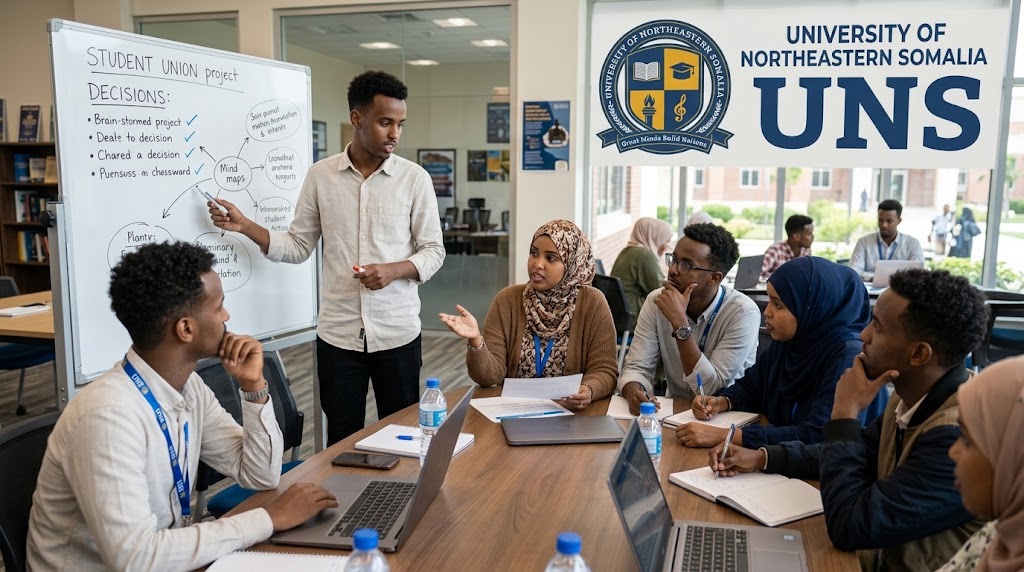
The Registry registers students on their courses each semester. Students watch a recorded lesson each week, join one live Zoom session per course, submit coursework and sit examinations. Everything a student needs is kept in one university account.
- Semesters a year
- 2
- Teaching weeks a semester
- 15
- Credit hours a semester
- 15
- Minimum attendance
- 75%
Teaching
Teaching and learning
What every registered student has access to.
One live session a week
Each course meets its lecturer once a week on Zoom, for questions, discussion and group work. Attendance is recorded.
Recorded weekly lessons
The teaching for each week is a recorded video lesson on the course page, watched when it suits you.
Examinations
Coursework, midterms and invigilated final examinations each semester, marked and moderated by the faculty.
University library
Textbooks, journals and past papers, open to every registered student.
Academic advising
Every student is assigned an advisor in their department for course selection and progress.
Student records
Course registration, timetable, results and transcripts are kept in one student account from admission to graduation.
A typical week
What a week looks like
A sample timetable for a second-year Computer Science student. Timetables are published before each semester begins.
| Day | Time | Course | Session |
|---|---|---|---|
| Saturday | Any time | Data Structures & Algorithms | Recorded lesson |
| Sunday | 10:30 – 12:00 | Data Structures & Algorithms | Live on Zoom |
| Monday | Any time | Database Systems | Recorded lesson |
| Tuesday | 14:00 – 15:30 | Database Systems | Live on Zoom |
| Wednesday | Any time | Computer Networks | Recorded lesson |
| Thursday | 08:00 – 09:30 | Computer Networks | Live on Zoom |
Academic calendar
Academic year 2026/27
Two semesters of fifteen teaching weeks, each followed by an examination period.
Semester 1
- Orientation week
- 2 – 7 Jan 2027
- Classes begin
- 9 Jan 2027
- Midterm examinations
- 27 Feb – 4 Mar 2027
- Classes end
- 22 Apr 2027
- Final examinations
- 24 Apr – 6 May 2027
- Results released
- 20 May 2027
Semester 2
- Course registration
- 22 – 27 May 2027
- Classes begin
- 29 May 2027
- Midterm examinations
- 17 – 22 Jul 2027
- Classes end
- 9 Sep 2027
- Final examinations
- 11 – 23 Sep 2027
- Results released
- 7 Oct 2027
Assessment
Assessment and grading
Each course is marked out of 100. The final mark is converted to a letter grade and grade points.
Course mark
- Coursework and quizzes20%
- Midterm examination30%
- Final examination50%
| Grade | Marks | Grade points | Standing |
|---|---|---|---|
| A | 90 – 100 | 4.0 | Excellent |
| B+ | 85 – 89 | 3.5 | Very good |
| B | 80 – 84 | 3.0 | Good |
| C+ | 75 – 79 | 2.5 | Satisfactory |
| C | 70 – 74 | 2.0 | Pass |
| D | 60 – 69 | 1.0 | Marginal pass |
| F | Below 60 | 0.0 | Fail |
Student support
Help is part of the timetable.
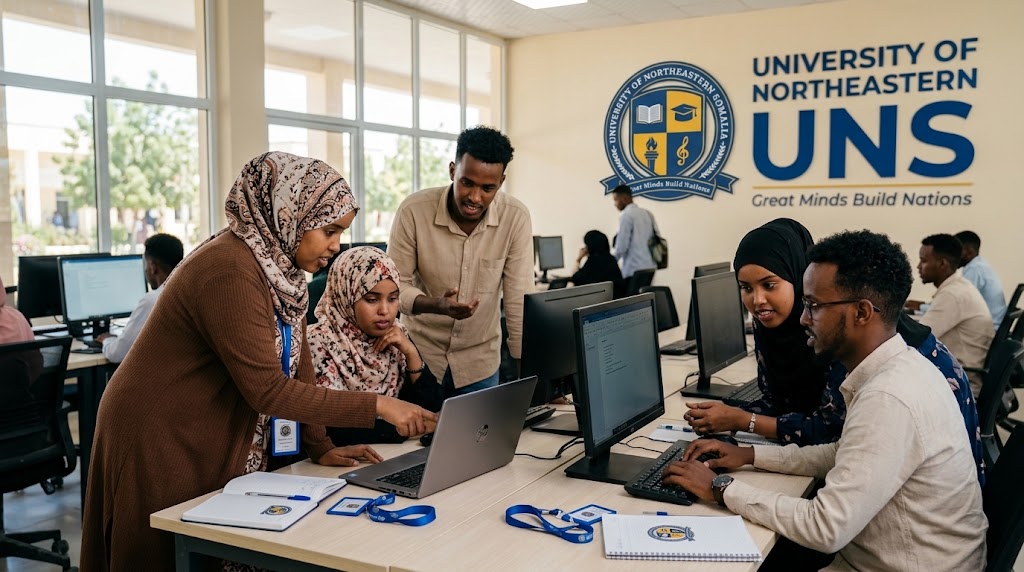
Students are not left to work things out alone. Each one has a named advisor and a set of services that run all semester.
- A named academic advisor in your department
- Library access to textbooks, journals and past papers
- IT help desk by phone, WhatsApp and email
- Study skills and academic writing workshops each semester
Regulations
Academic regulations
The rules every student agrees to at registration.
- Attendance
- Students must attend at least 75% of the scheduled classes in a course to sit its final examination.
- Progression
- A cumulative GPA of 2.0 or above is required to progress to the next year of study.
- Resits
- A failed course may be resat once in the following resit period before it must be repeated.
- Academic integrity
- Submitted work is checked for plagiarism. Cases are referred to the faculty board.
Graduation
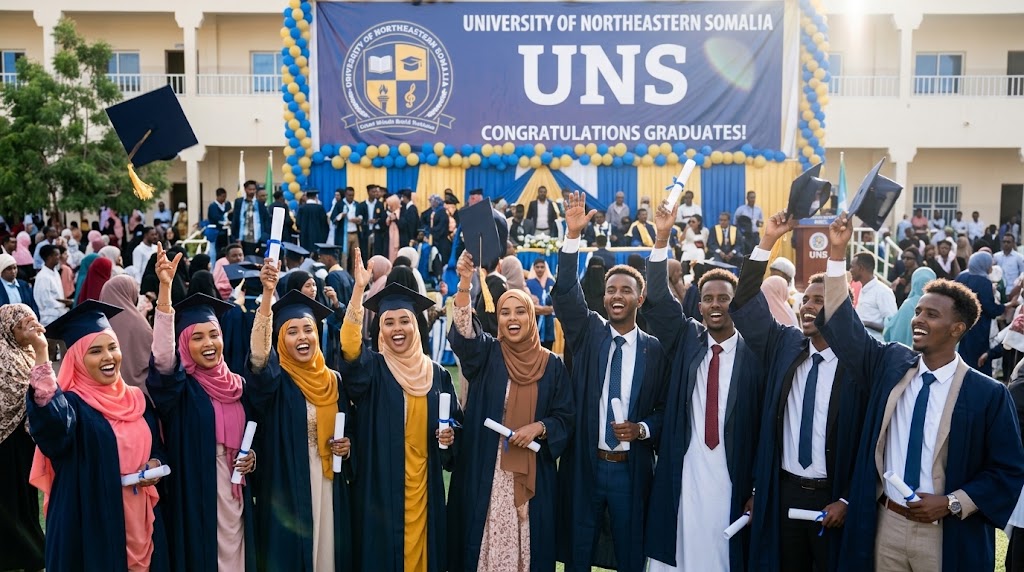
Three years, six semesters, one ceremony.
Students who meet the credit and GPA requirements of their programme are presented by their faculty at the annual graduation ceremony.
Browse programmesFAQ
Questions about studying
Great Minds Build Nations
Join the January 2027 intake.
Applications close on 15 December 2026.